
Boracay's three stations
Contents 14
- Three facts that cover the basics
- If you remember the closure
- How it compares to the obvious alternatives
- Thirty-second diagnosis
- Station 2 — if it's your first visit
- Station 1 — quiet and the widest sand
- Station 3 — for a longer stay
- Families with children — southern Station 1
- Bulabog — the other side of the island
- Off White Beach
- The island by hour
- Five common booking mistakes
- Getting around the island
- In short — location is half the holiday
Two things trip up first-time visitors to Boracay. The first is assuming "Station 1" is better than "Station 3". It isn't a grade.
The second is arriving with a picture of the island from before 2018.
Three facts that cover the basics
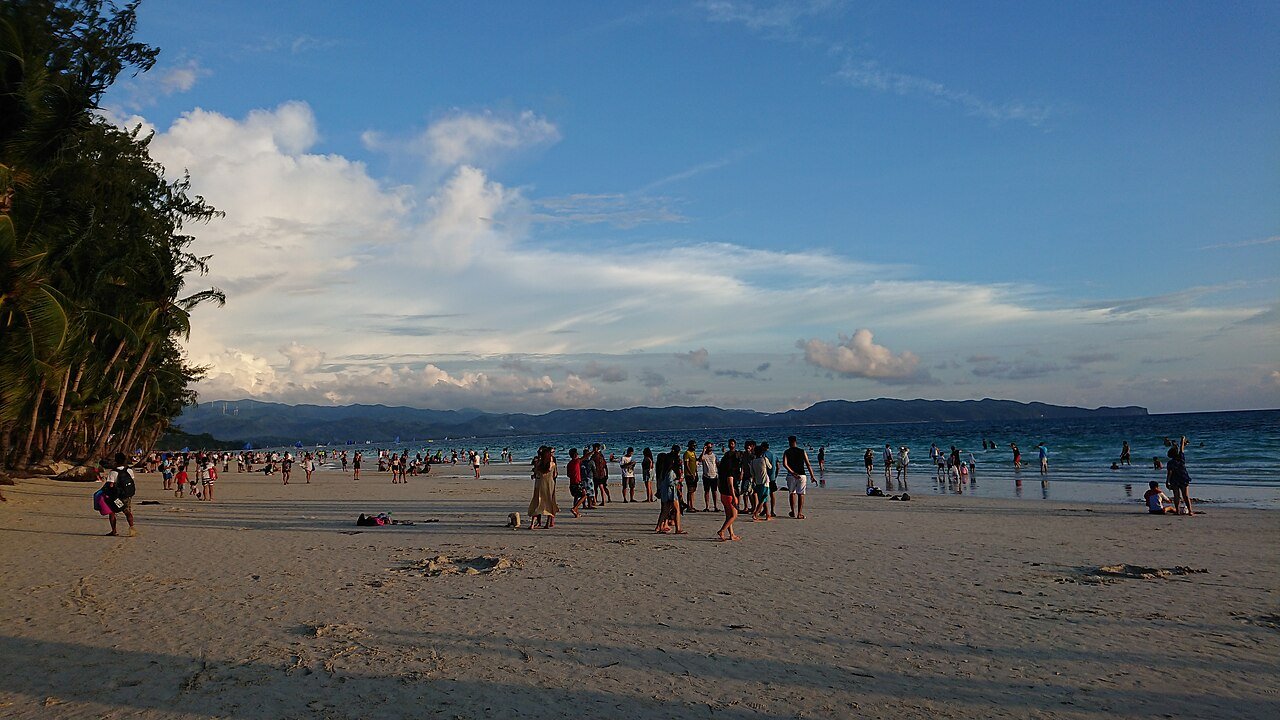
1) The number is a position, not a rating. White Beach runs about four kilometres, and it's divided north to south into Station 1 → 2 → 3. The names come from old boat landing points. "Station 1" does not mean first class.
2) There are no boundaries or fences. A footpath runs the length of the beach, so the whole strip is walkable. Roughly: Station 1 to 2 is about fifteen minutes, 2 to 3 the same, end to end about fifty minutes — on the path, not on the sand.
3) The island's commercial centre is D'Mall, in Station 2. Most restaurants, shops and ATMs are there.
If you remember the closure
In 2018 the Philippine government shut Boracay to tourists for six months — late April to late October — to rebuild the sewerage and road network, demolish structures built over the water easement, and reset how the island operates. It was international news, and a lot of people's mental image of Boracay is still either the pre-2018 party island or the shuttered one.
Neither is current. What came out of it is a set of rules that materially shape the holiday:
- No eating, drinking or smoking on the sand itself. Bars and restaurants set back from the beach serve normally — you just don't carry it onto the beach. If your plan was a beer on the sand at sunset, revise it.
- No beach parties. The large-scale events the island was known for — Laboracay and similar — were banned and have not returned.
- No vendors on the sand. This is the change visitors notice most and like most: you can lie down without being approached every few minutes. If you've been to beaches in Bali or parts of Thailand, the difference is immediate.
- A cleared easement. Structures encroaching on the beach were removed, which is why the sand is wider than in older photographs.
Net effect: it's cleaner, quieter and more regulated than its reputation. Whether that's an improvement depends entirely on what you came for — and that's a decision worth making consciously, because the island's online reputation still lags the reality by several years.
How it compares to the obvious alternatives
Most English-speaking readers are choosing between Boracay, Thailand and Bali, so it's worth being direct.
- The beach itself is the strongest case. White Beach is genuinely exceptional — fine white sand, shallow, calm water, and now vendor-free.
- It is smaller and more contained than Phuket or Bali. That's a virtue if you want to walk everywhere and a limitation if you want variety over two weeks.
- It is less of a party island than it was, by regulation. If nightlife is the point, this is no longer the obvious choice in the region.
- Getting there has an extra step. No international airport on the island; you fly to Caticlan or Kalibo and take a boat. Budget for that.
- English is an official language, which removes a layer of friction that Thailand and Indonesia don't.
Thirty-second diagnosis
| You | Area |
|---|---|
| First visit, want everything close | Station 2 |
| Quiet, honeymoon, widest sand | Station 1 |
| Long stay, watching the budget | Station 3 |
| Family with children | Southern Station 1 |
| Want away from crowds entirely | Off White Beach — Diniwid or Puka |
| Kitesurfing or windsurfing | Bulabog, the east side |
Station 2 — if it's your first visit
Everything is close: restaurants, shops, ATMs, tour desks. You step out of your room into the activity.
There's a cost. Daytime beach density is the highest on the island here, and activity touts concentrate in this stretch. Beachfront bars run music late.
If you're a light sleeper, the practical move is a row or two back from the beach (two or three minutes' walk). The noise drops and so does the price.
Mid-range hotels span a wide band, roughly 3,000–8,000 pesos a night, varying a great deal by season, how far ahead you book, and the state of the place. Treat it as a sense of scale, not a quote.
📌 What actually matters in Station 2 is "how many minutes from D'Mall". Two places both labelled Station 2 can be one minute apart or fifteen. Check the location on a map before booking — don't trust the station name.
Station 1 — quiet and the widest sand
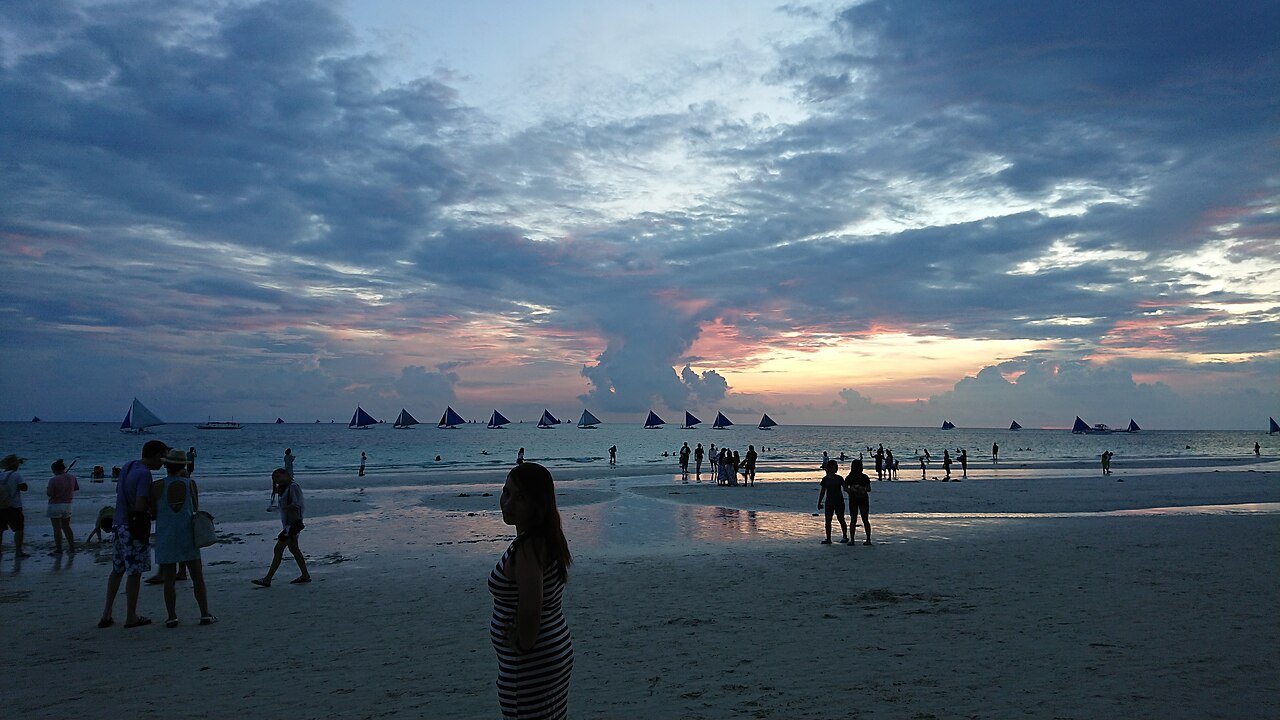
The widest sand on the island is here, resorts are larger and further apart, and the atmosphere is calmer.
Two things to weigh:
- Prices are generally the highest. In high season the upper-end resorts climb considerably.
- D'Mall is a 15–20 minute walk, over 25 from the northern end. If you'll be going out most evenings, southern Station 1 is the balance point.
Station 3 — for a longer stay
The southern end has a different character: guesthouses and smaller places, and restaurants and shops priced for residents rather than visitors. Rooms without breakfast can be found in the 1,500–3,500 peso band (varying sharply by season).
Over two weeks or more, the cumulative difference is real.
Families with children — southern Station 1
The water here is calm and shallow for a good distance, and the sand is wide enough for children to use without being on top of anyone. The sweet spot is southern Station 1, 10–15 minutes' walk from D'Mall: a quiet beach and a reasonable walk to dinner, manageable with a pushchair or small legs.
It's also the furthest from the beachfront bars while still being on White Beach.
Bulabog — the other side of the island
Directly opposite White Beach, on the east coast. During the Amihan (northeast) wind season, roughly November to April, the wind is strong and the water choppy — poor for swimming, ideal for kitesurfing and windsurfing.
The island is narrow, so it's a 10–15 minute walk from Bulabog to White Beach. People who ride tend to stay on the Bulabog side and cross west each evening for the sunset.
Worth noting for northern-hemisphere readers: this season runs through your winter, which is the opposite of the Mediterranean and Atlantic seasons you may be used to planning around.
Off White Beach
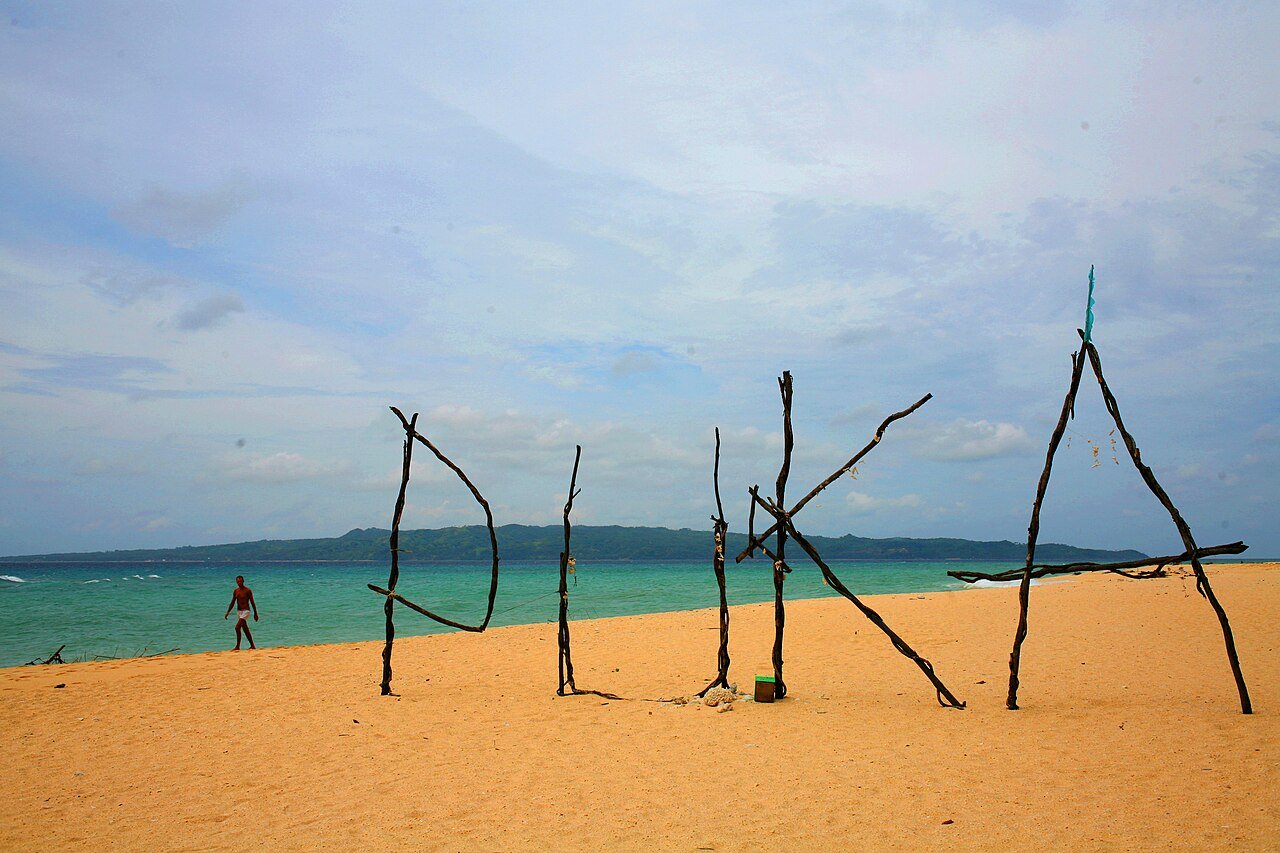
- Puka Beach — the northern tip. Coarser sand with shells, very few facilities, far fewer people. Good for half a day rather than for staying.
- Diniwid Beach — a small cove reached from the northern end of Station 1 by a narrow path beside the rock. Still within walking distance of White Beach, but the atmosphere drops away immediately. The most realistic answer for "quiet but not isolated".
The island by hour
- Morning (06:00–09:00) — everywhere is quiet. Station 1's wide sand is at its best, so early risers get more out of staying there.
- Midday — Station 2 density peaks, as does the heat. A room within walking distance of the beach earns its money here.
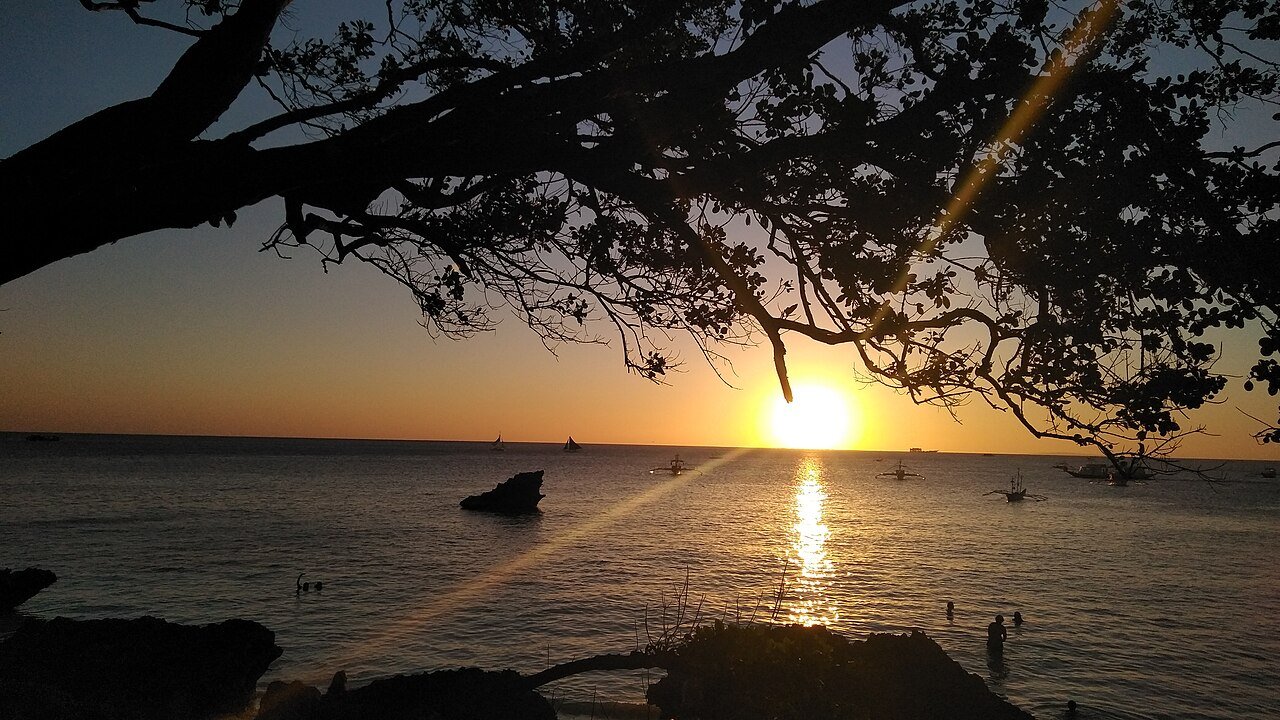
- Sunset — the whole of White Beach faces west. The view is good from anywhere. Don't pay a premium for it.
- Evening — this is where the areas diverge. Station 2 stays lively; Station 1 and the outer beaches are quiet.
Five common booking mistakes
- Treating the number as a grade. It's position only.
- Fixating on beachfront. Two rows back (2–3 minutes) drops the price noticeably. But don't go so far back that you're on the main road — then it's motorbike and tricycle noise instead. Between the beach and the main road is usually the balance.
- Not checking the map. Same station name, one minute or fifteen from D'Mall.
- Assuming all-inclusive. It isn't that kind of destination — most stays are room-only or room-and-breakfast, and you eat out. Budget accordingly.
- Not costing the transfer. You fly into Caticlan (closest) or Kalibo (further, often cheaper), then a land transfer, a jetty and a short boat crossing. Local fees apply on entry, including an environmental fee and terminal fees. Amounts change — check at the time of travel.
Getting around the island
The path is flat and continuous, so walking is the default. With luggage, or crossing north or east, you take an electric tricycle (e-trike) from the main road. Shared is around 20–50 pesos per person; hiring the whole vehicle starts around 100–200 pesos depending on distance. Fares vary with distance, time of day and negotiation, so agree the fare before you get in — a good habit throughout the Philippines, not just here.
In short — location is half the holiday
- First visit → Station 2, checking your distance from D'Mall on a map.
- Quiet and wide sand → Station 1, southern end if you'll go out in the evenings.
- Long stay → Station 3.
- Family with children → southern Station 1.
- Away from all of it → Diniwid or Puka.
- Wind sports → Bulabog, November to April.
And set your expectations from the current island rather than the old one: no drinking on the sand, no beach parties, no vendors — and a considerably better beach for it.
※ Prices, seasons, fees and service levels change. Verify figures for your travel dates; the ranges here are for orientation. This article deliberately names no hotels or restaurants.
Information on this site reflects the date it was written, and local rules and prices change constantly. Always confirm directly with the relevant authority before making an important decision.