
Filipino food
Contents 12
- The one thing that explains the cuisine: vinegar
- The second thing: it's sweet, and it isn't hot
- Where the Philippines is genuinely excellent: the sea
- The dishes worth knowing
- If you're vegetarian, read this bit
- If you avoid pork
- The part of the cuisine almost no one writes about
- On balut
- Food safety — two rules cover most of it
- The meal rhythm is different
- A suggested order for your first week
- In short
Filipino food has a reputation problem in English-language travel writing, and most of it comes from the same two habits: ranking it against Thai and Vietnamese food as though it were trying to be those, and leading with balut as a dare.
Neither tells you anything useful. So here is the version that does.
The one thing that explains the cuisine: vinegar
If you take a single idea away, make it this one. The backbone of Filipino cooking is sourness, and the source is vinegar.
That's not a stylistic quirk. It's food preservation in a hot, humid archipelago long before refrigeration. Meat cooked down in vinegar keeps. Raw fish cured in vinegar is safe to eat. The technique came first and the flavour profile grew out of it.
Which is why adobo — the national dish — is meat simmered in vinegar, soy and garlic. The Spanish word adobar means to marinate, and the colonial name got attached to a method that was already there.
Once you know to expect sour, the food stops seeming random.
The second thing: it's sweet, and it isn't hot
Two expectations to reset before your first meal.
Sweet turns up where you don't expect it. Spaghetti is sweet, as a national standard, often with sliced hot dogs in it. Barbecue sauce is sweet. Bread is sweet, including the plain-looking rolls. Breakfast sausages are sweet. Ketchup is frequently banana ketchup, which is sweeter than tomato.
And almost nothing is chilli-hot. If you're coming from India, Thailand, Malaysia, Sri Lanka, Mexico or a decent British curry house, what's labelled "spicy" here will read as mild.
The fix is easy once you know: ask for chilli on the side. The local bird's eye chilli is siling labuyo and it genuinely is hot. The one regional exception is covered further down, and it's worth seeking out.
Where the Philippines is genuinely excellent: the sea
This is the part no list gives enough room to.
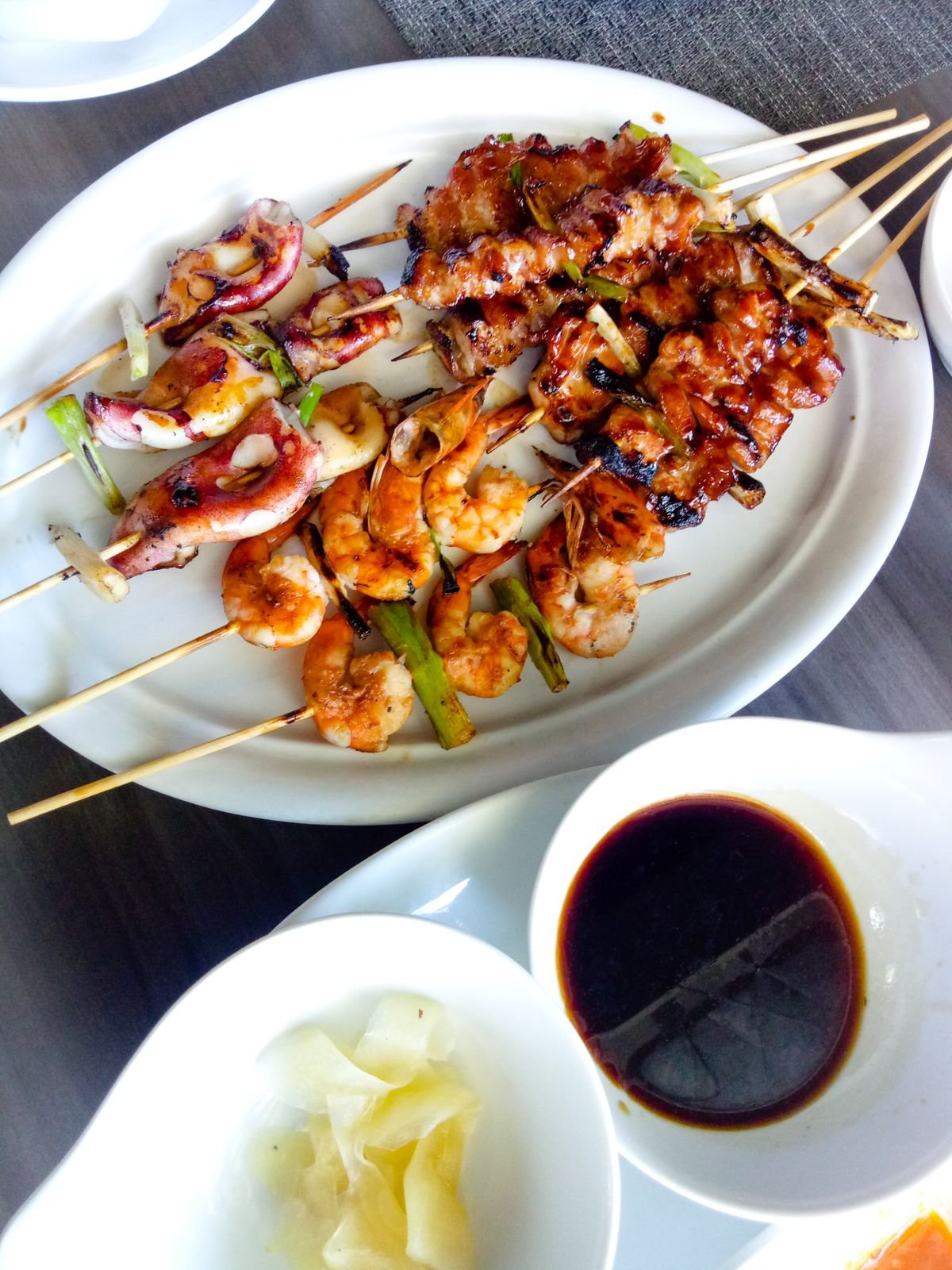
Seven thousand islands. The seafood is the strength of the cuisine, it's cheap by almost any visitor's standards, and it sidesteps every dietary complication in the article.
- Inihaw na isda — charcoal-grilled fish. The national fish is bangus (milkfish): white, soft, mild. Look for the word inihaw on a menu; it means grilled over coals.
- Grilled prawns, squid, crab — straightforward and very good.
- Kinilaw — raw fish cured in vinegar with ginger, onion and chilli. Closer to ceviche than to sashimi, and the purest expression of the vinegar principle above. If you try one thing that isn't on the standard lists, try this.
- Sinigang na hipon — the sour tamarind soup, made with prawns. Hot, sour, restorative in the heat.
📌 The best way to eat seafood here: in coastal towns there are markets where you pick the fish yourself and pay a nearby restaurant a cooking fee to prepare it. You choose the size and the method and wait. It's cheaper, fresher, and there's no ambiguity about what you're eating.
The dishes worth knowing
| Dish | What it is | Worth knowing |
|---|---|---|
| Adobo | Meat braised in vinegar, soy and garlic | The national dish. Chicken and pork versions are both common; ask for whichever you want |
| Sinigang | Sour tamarind soup | Comes with prawn, fish, pork or beef. Baboy means pork |
| Lechon | Whole spit-roast pig | The centrepiece of every celebration. Cebu's version is the one people argue about |
| Sisig | Chopped pork, served on a sizzling plate | From Pampanga. Rich, sour, salty — arguably the best thing in the cuisine |
| Pancit | Stir-fried noodles (bihon, canton) | Served at birthdays, for long life |
| Lumpia | Fried rolls | Shanghai is meat; gulay is vegetable |
| Kare-kare | Oxtail in peanut sauce | Served with bagoong, a shrimp paste, on the side. Nothing like a Thai peanut sauce |
| Tinola | Ginger chicken soup | Clean and mild; good on a day your stomach is unhappy |
| Halo-halo | Shaved ice, condensed milk, beans, jelly, purple yam, ice cream | Sounds chaotic, works completely in 34-degree heat |
| Silog | Rice + egg + cured meat | The breakfast formula. Tapsilog, tocilog, longsilog are all variants of it |
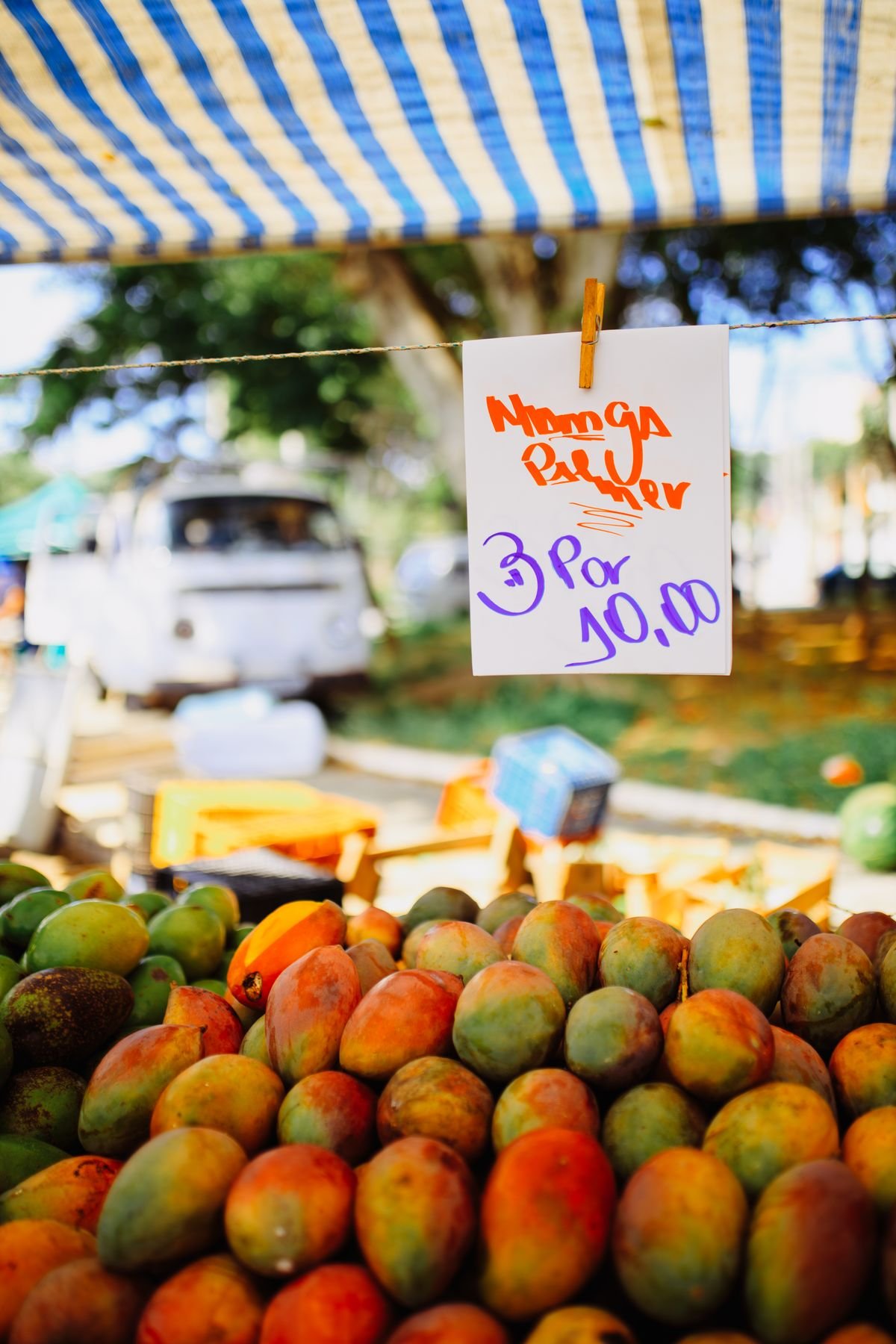
And the fruit, which is a reason to come in its own right: mangoes (those from Guimaras are the ones Filipinos name), buko (fresh coconut water, served in the coconut), and seasonal lanzones, rambutan and mangosteen.
If you're vegetarian, read this bit
English-language guides to Filipino food tend to wave at this and move on. It deserves better, because the Philippines is genuinely difficult for vegetarians and you should know that before you arrive rather than on day three.
The problem isn't just that meat is everywhere. It's that fish sauce (patis) and shrimp paste (bagoong) are in things that read as vegetable dishes.
- Pinakbet is a vegetable stew — and it's seasoned with bagoong.
- Laing is taro leaves in coconut milk — and it very often has pork or dried fish in it.
- Kare-kare is sometimes made vegetarian, but the shrimp paste is served with it by default.
What actually works:
- Ginataang gulay — vegetables in coconut milk. Ask for it without shrimp or pork.
- Chop suey and stir-fried vegetables — widely available, usually straightforward.
- Lumpiang gulay — vegetable spring rolls.
- Ensaladang talong — grilled aubergine salad.
- Rice, eggs, and fruit, which are abundant and cheap everywhere.
- Taho — warm soft tofu with brown sugar syrup and sago, sold by street vendors in the morning. Simple and genuinely good.
- Puto and suman — steamed rice cakes.
The phrase that works: "No meat, no fish sauce, no shrimp paste." Say all three; saying only the first will not get you there. English is an official language, so you'll be understood — this is a question of being specific, not of being translated.
Indian vegetarians in particular: self-catering for at least some meals will make a long stay much easier.
If you avoid pork
Worth stating plainly because the standard "top ten" lists are close to useless here — lechon, lechon kawali, sisig, chicharon and most breakfast meats are all pork.
- The question "Is this pork?" is understood everywhere and is completely unremarkable to ask. The Philippines has millions of Muslim citizens.
- Baboy is the Tagalog word for pork. Spot it on a menu and move on.
- Chicharon, sold in every shop as a crisp-style snack, is fried pork skin.
- Packaged labels are in English, so reading the ingredients is straightforward.
- For halal specifically, there is a formal system: the National Commission on Muslim Filipinos (NCMF) accredits the bodies that certify. In Manila, the area around Quiapo and the Golden Mosque, and Maharlika Village in Taguig, are where you'll find the options; in Cebu, the Mambaling area.
- And the simplest answer in an island country: eat from the sea.
The part of the cuisine almost no one writes about
If you read one section twice, make it this one.
The southern Philippines — Mindanao, Sulu and the Bangsamoro region — has its own distinct Muslim cuisine, and it is almost entirely absent from English-language coverage of Filipino food. It's also the answer to "why is nothing spicy".
- Pastil — steamed rice with shredded chicken or fish, wrapped in banana leaf. From the Maguindanao people; a cheap, everyday breakfast in Mindanao.
- Piyanggang manok — chicken cooked with burnt coconut, turmeric, lemongrass, ginger and coconut milk. From the Tausug of Sulu; distinctively dark.
- Tiyula itum — a beef or goat soup, also built on burnt coconut.
- Palapa — a Maranao condiment of ginger, chilli and sakurab scallions. It is by a distance the hottest thing you will find in the Philippines.
- Satti — skewers in a hot sauce, common in Zamboanga and Sulu.
You don't have to go south to find these. Mindanao restaurants exist in Manila and Cebu — look for Maranao, Halal or Mindanao in the name.
On balut
It's a duck egg with a developed embryo, eaten with salt and vinegar, usually in the evening, usually from a vendor with a basket.
It is also, for Filipinos, ordinary food — not a test and not a joke. The travel-show framing where a visitor gags on camera for a reaction is the single most tired thing in English-language coverage of this country, and locals are thoroughly bored of it.
So: try it or don't. Both are fine. Just don't make it a performance, and don't let it stand in for an entire cuisine.
Food safety — two rules cover most of it
- Never drink tap water. Bottled is cheap and everywhere.
- Ice in established restaurants and chains is generally fine (made from treated water); ice from roadside vendors is less certain. If your stomach is sensitive, avoid it for the first few days.
- Hot food fried in front of you is safer than anything that's been sitting out.
The meal rhythm is different
| Meal | There | Note |
|---|---|---|
| Breakfast | 06:00–08:00 | Early, and it's rice |
| Lunch | 11:30–13:00 | A little early |
| Merienda | 15:00–16:00 | A proper named snack, mid-afternoon. Closest thing to afternoon tea |
| Dinner | 18:00–19:30 | Much earlier than you're used to |
That last row is the one that catches people out. By half past seven local restaurants in smaller towns are emptying and some are closing. British and American readers will find it manageable; southern Europeans will find it drastic.
A suggested order for your first week
- Grilled bangus with rice — the safest and most immediately likeable entry point.
- Buko — on day one, in the heat.
- Sinigang na hipon — so you understand the sour thing.
- Chicken adobo — the national dish.
- Kinilaw — once you trust where you're eating.
- Sisig — if you eat pork, this is the one.
- Halo-halo — at the hottest hour of the day.
- Something from Mindanao — pastil or piyanggang manok, if you can find it. This is the one you'll actually remember.
In short
Filipino food is sour before it is anything else, sweeter than you expect, and milder than you want. Its best work is seafood, its most interesting region is the one nobody writes about, and its reputation in English suffers mostly from being described by people looking for something else.
Learn one word — baboy — ask one question — "Is this pork?" — and if you're vegetarian, name all three of meat, fish sauce and shrimp paste.
※ Prices, availability and certifications vary by region, season and time. This article deliberately names no restaurants; places change faster than articles do.
Information on this site reflects the date it was written, and local rules and prices change constantly. Always confirm directly with the relevant authority before making an important decision.